Product Design
Designing a Web3 Enterprise Platform for Web2 Businesses
I joined Mojito to help design a platform that onboards organizations and their audience into Web3,
easing friction for new users and unlocking possibilities with on-chain data that goes beyond
trading high-value digital tokens.
Confidential information have been redacted from this case study.
All opinions presented are my own and does not reflect the views of Mojito.
The Challenge
Designing from Zero to One
My design role for this project evolved at certain periods in the company — from early V1 contributor
to prioritizing other projects before coming fully back in for V2 eventually making design decisions, milestone developer hand-offs,
testing, and onboarding incoming Designers into the project.
Discovery
Version 1 MVP
While working on initial explorations we determined it was important for the team to get a good grasp of Web3 jargon and complex
concepts such as token contracts and on-chain transactions to help inform our initial explorations.
With a Developer team who are experts in the space, we set up frequent learning Q&A meetings, asking questions about NFTs and
the blockchain which not only helped us get up to speed with developments in the space but also validated our assumptions on
designing initial user flows mainly focused on Developer user types responsible for crafting token contracts.
“It was important for us to get a good grasp of Web3 jargon and complex concepts such as token contracts and on-chain transactions
to help inform our initial explorations.”
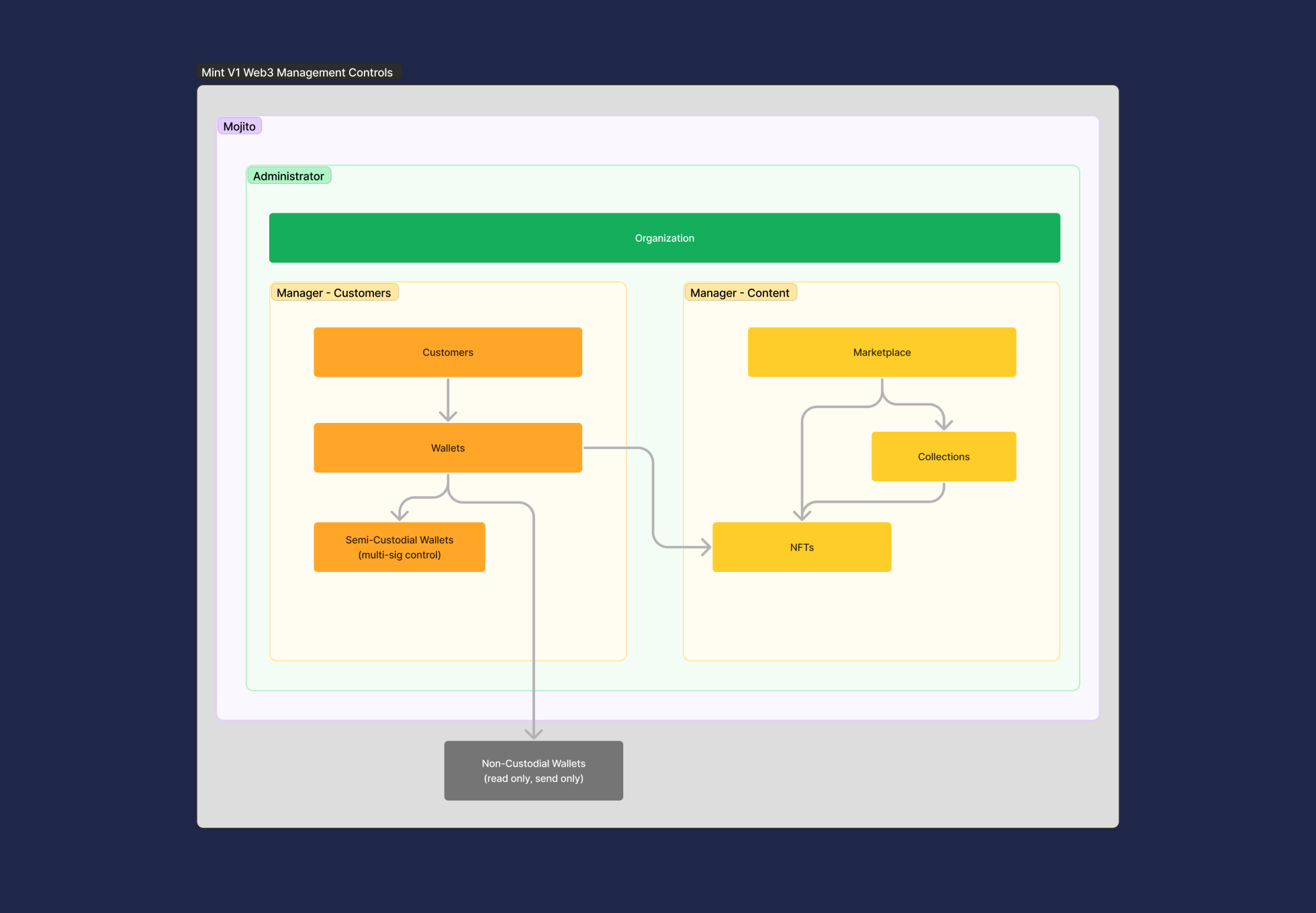
For Mint V1, we focused on designing for two user types: “Developers” familiar with the Web3 space,
mainly responsible for creating and minting tokens — and “Managers,” who are usually new to Web3 and whose responsibilities involve
preparing the minted items for sale and managing each sales when it goes live until it is delivered to the buyer's
wallet.
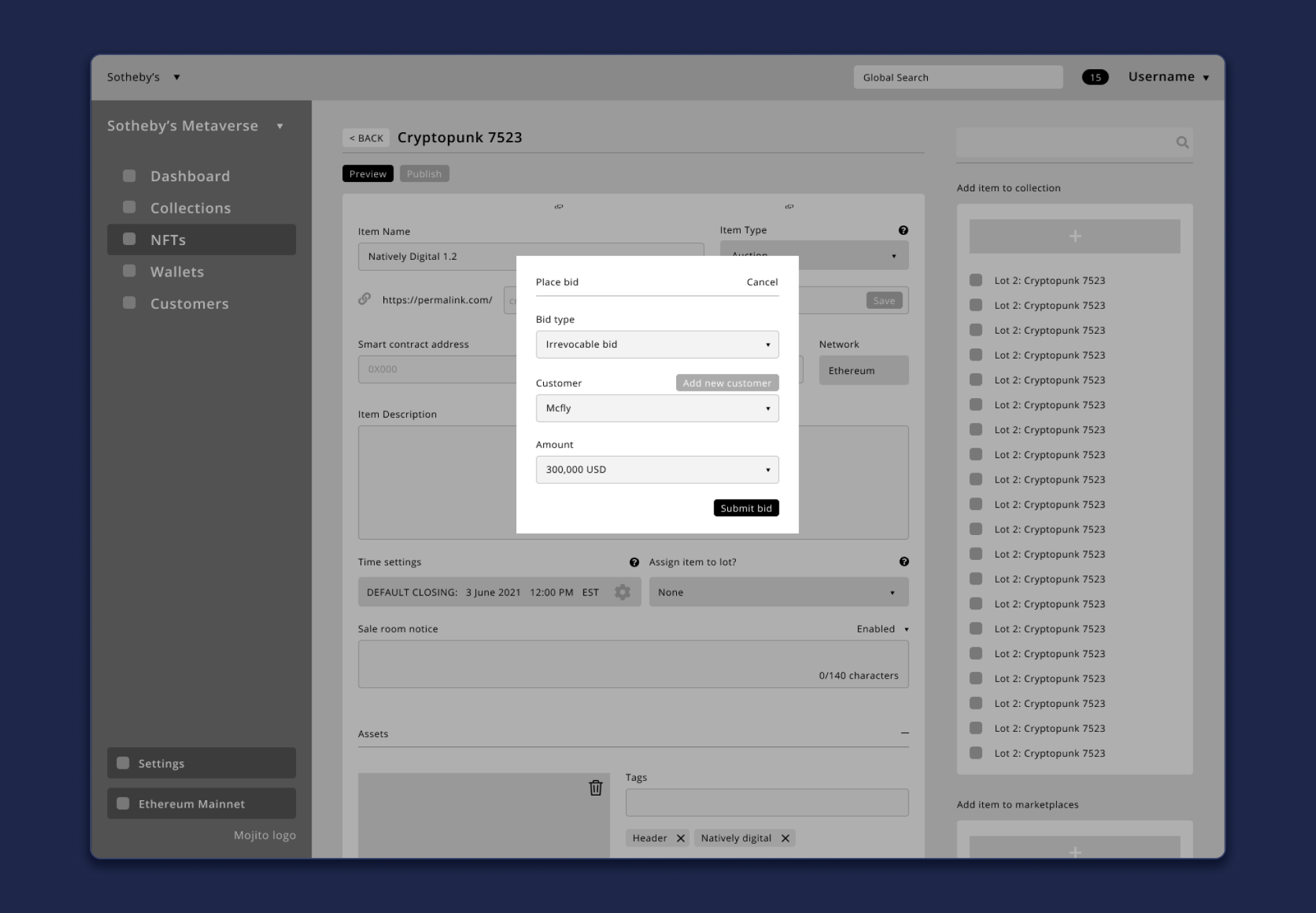
My initial design explorations focused on Manager user types (Customer Managers and Content
Managers) that would use the Mint platform for the following tasks:
- Selecting minted/imported tokens to set up for sale
- Setting up the collection / marketplace
- Managing sales
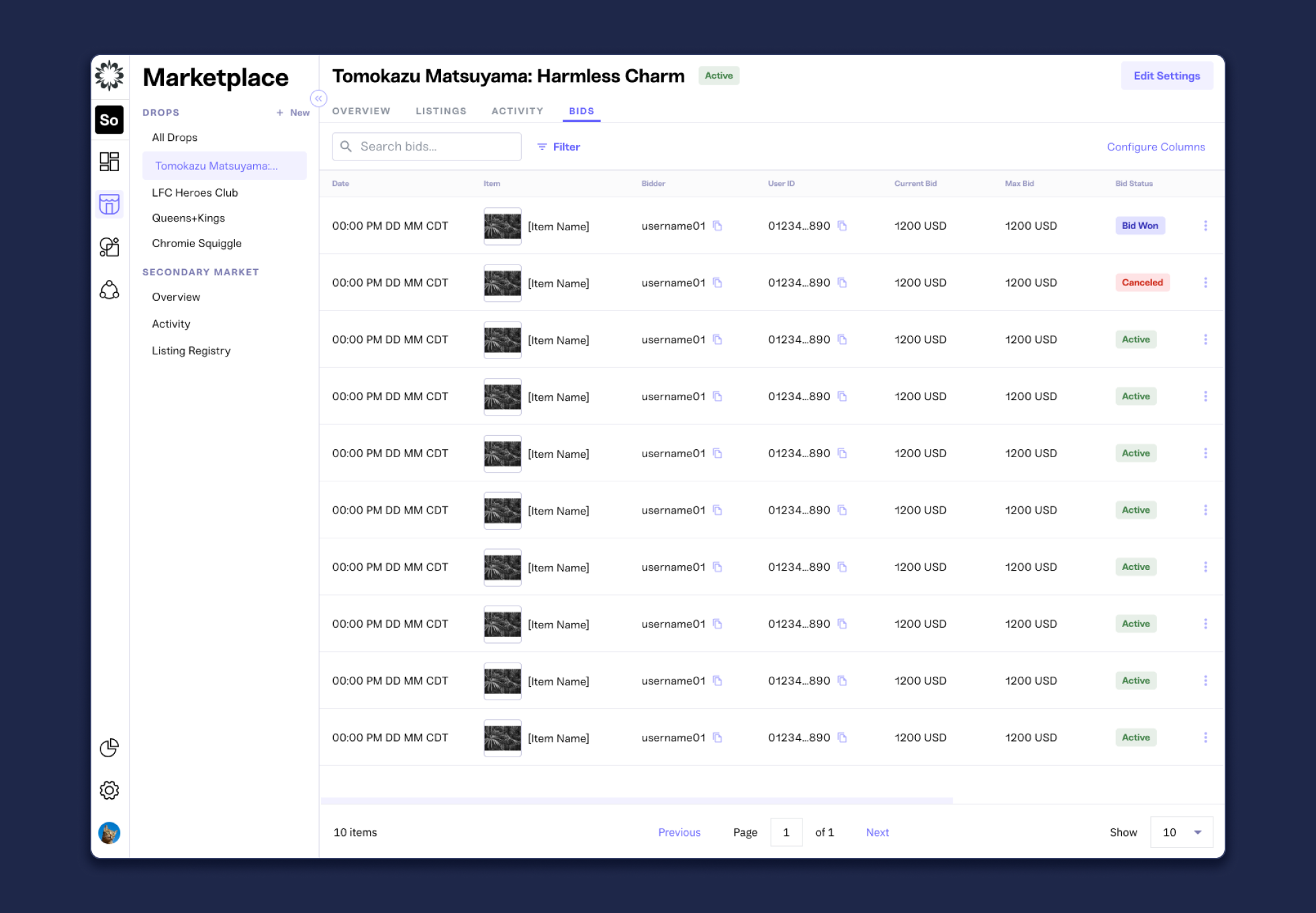
- Managing bids for auction type sales
- Managing customers
Task
Mint V1 Design and Development
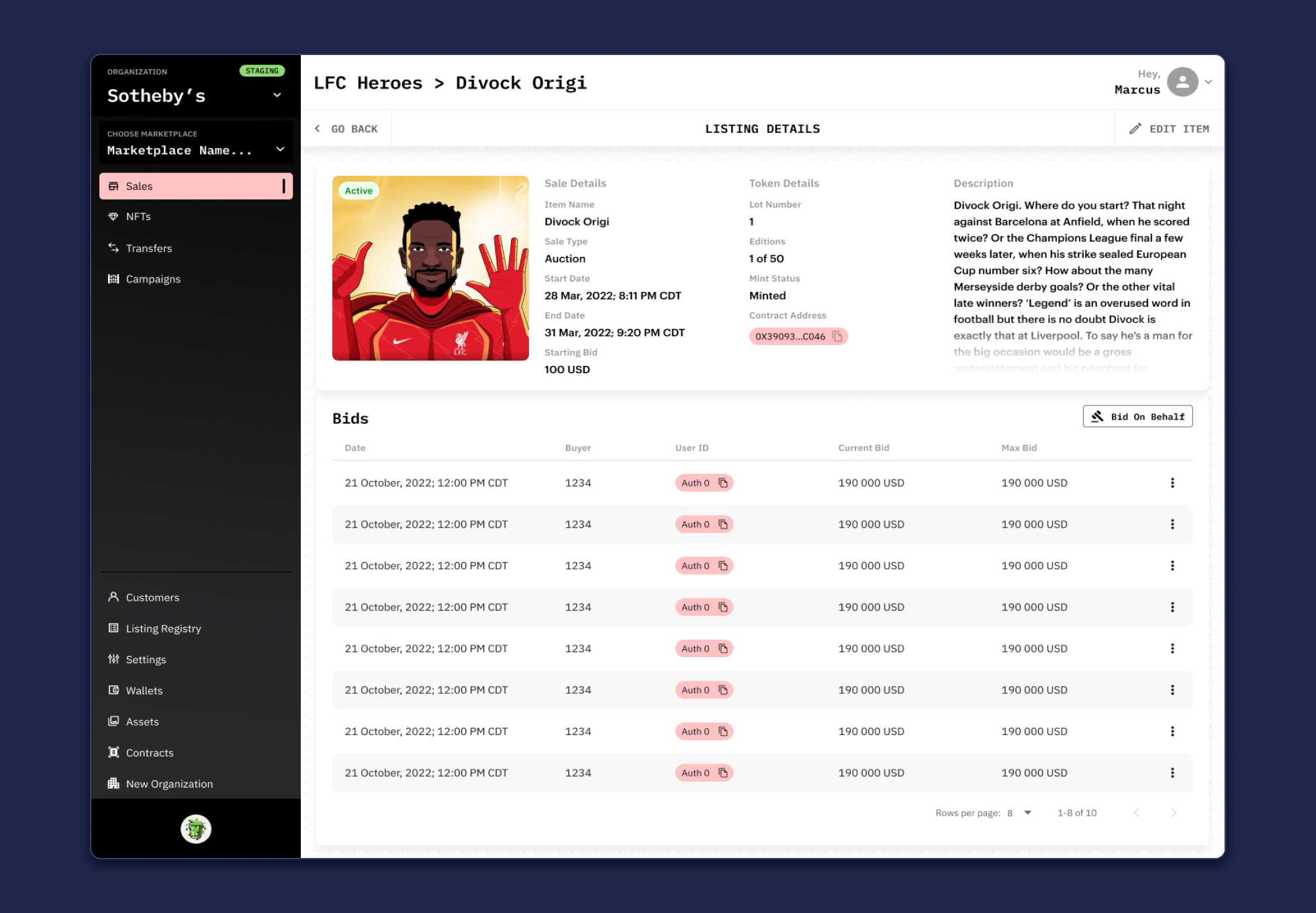
Sotheby's, one of Mojito's first clients, helped shape the initial version of the product. During
our discovery phase, they shared the internal tool they use to manage their items and sales which include their
bidding mechanism. They were looking for its Web3 counterpart that will allow them to create digital items,
mint them into the blockchain, and put them up for sale in their marketplace — Sotheby's Metaverse.
Parts of V1, particularly the minting and item importing flows, where being actively developed while the rest of
the platform was still being designed. This gave us information as to what initial users thought of the platform and
made discoveries on what wasn't working well.
Another Challenge
New Changes
As we continued to gather insights from V1 platform usage and building out the remaining parts of the product, we found that
V1 of Mint ended up mostly being used internally, helping clients build their marketplaces and manage their sales as they've found it
too complex to handle by themselves as non Web3 natives.
We were also met with big changes not just with product strategy, but as an organization. With a change in go-to-market strategy and scope,
we reconsidered our approach to design and shifted back into discovery phase for what a V2 of the Mint platform would be.
Action
Designing a Friendlier Platform
Our Lead Designer spearheaded the redesign of V2 of Mint with the goal of making it less intimidating for non Web3 natives to
accomplish tasks while also giving them access to the blockchain via the platform just like in V1.
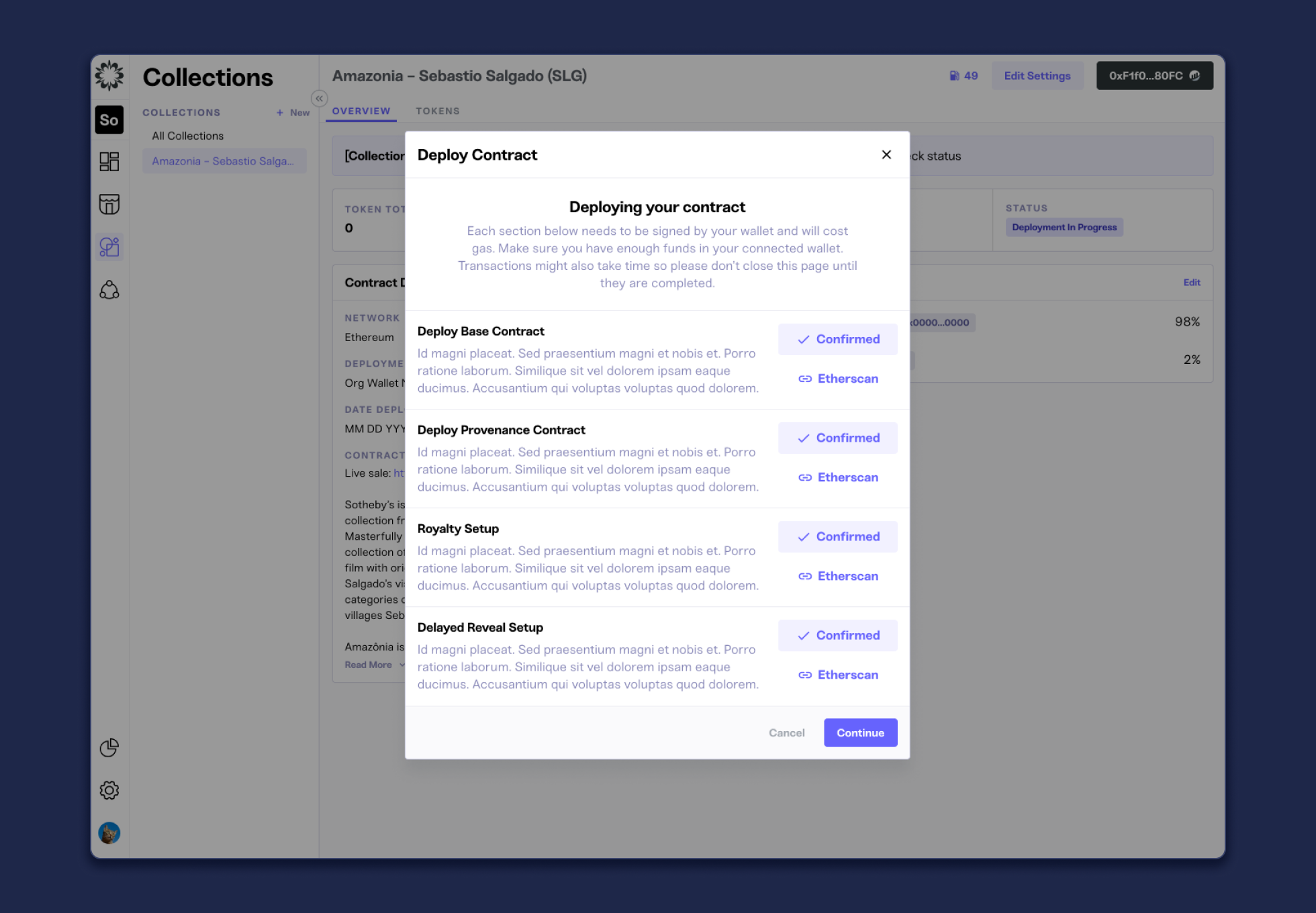
Most patterns used in Mint are borrowed from Web2 so users remain on familiar ground. Only when there is contract or blockchain
interaction where the abstraction is lifted and they are taken into simplified wallet signing flows.
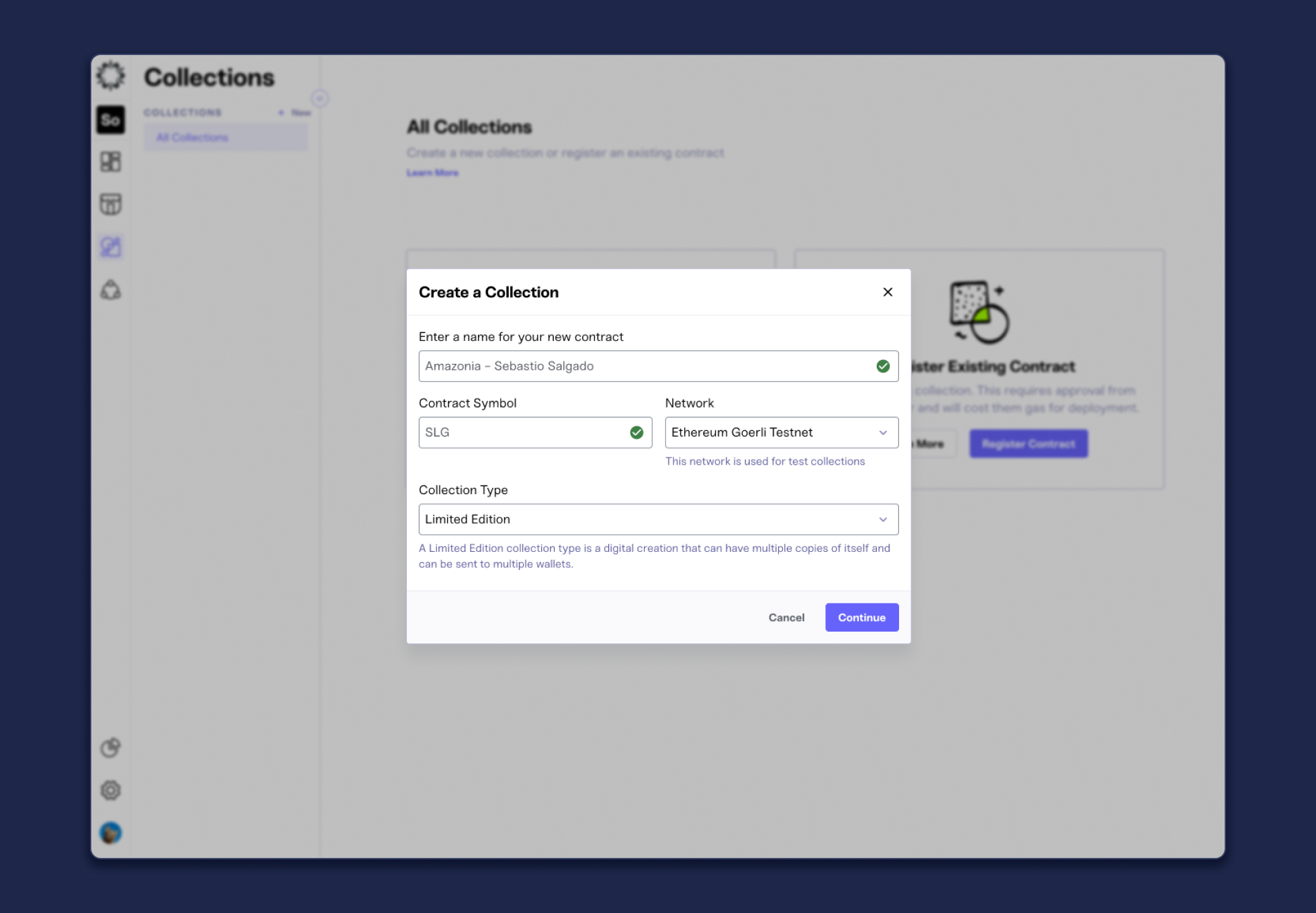
“Most patterns used in Mint are borrowed from Web2 so users remain on familiar ground. Only when there is contract or blockchain
interaction where the abstraction is lifted and they are taken into simplified wallet signing flows.”
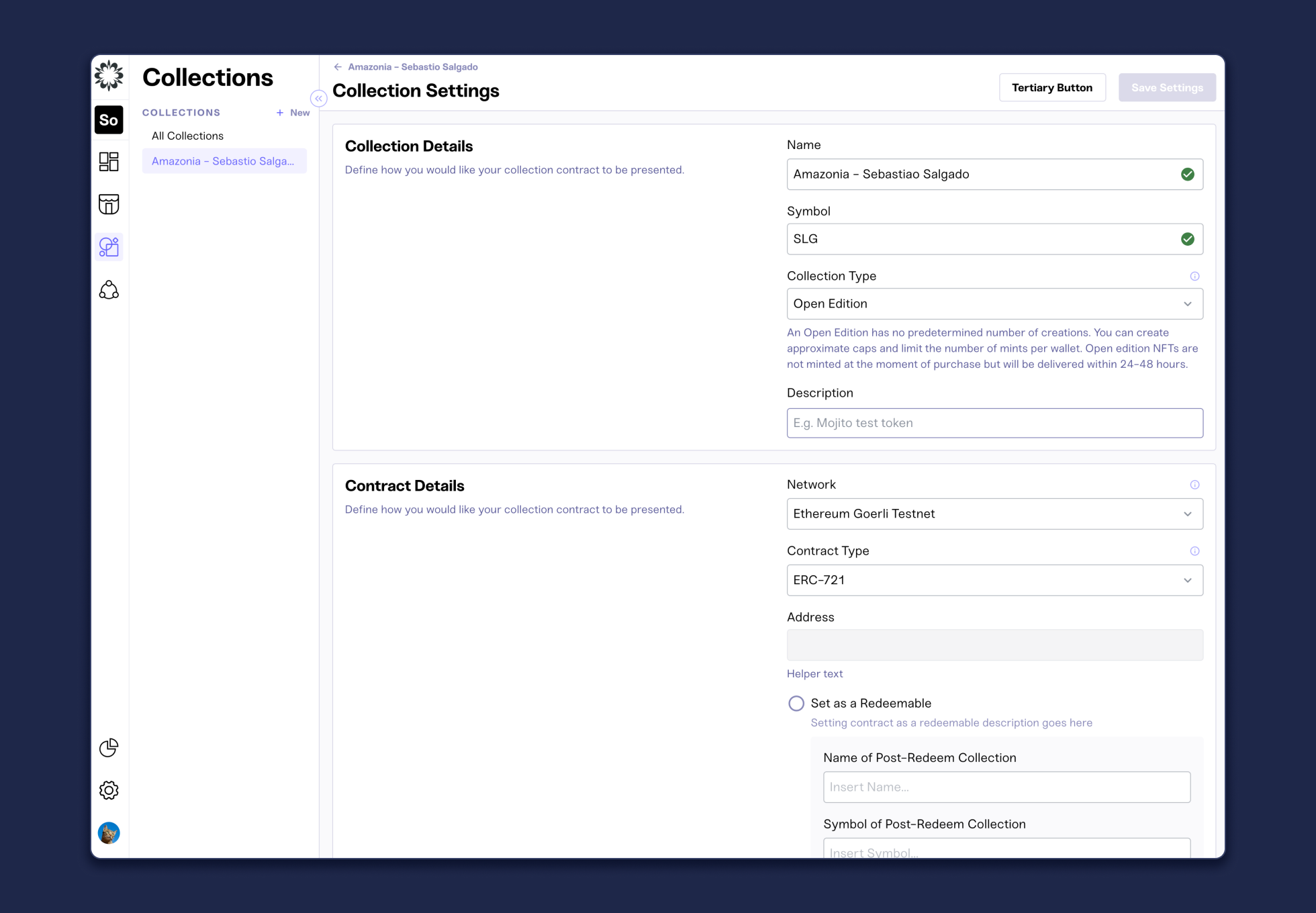
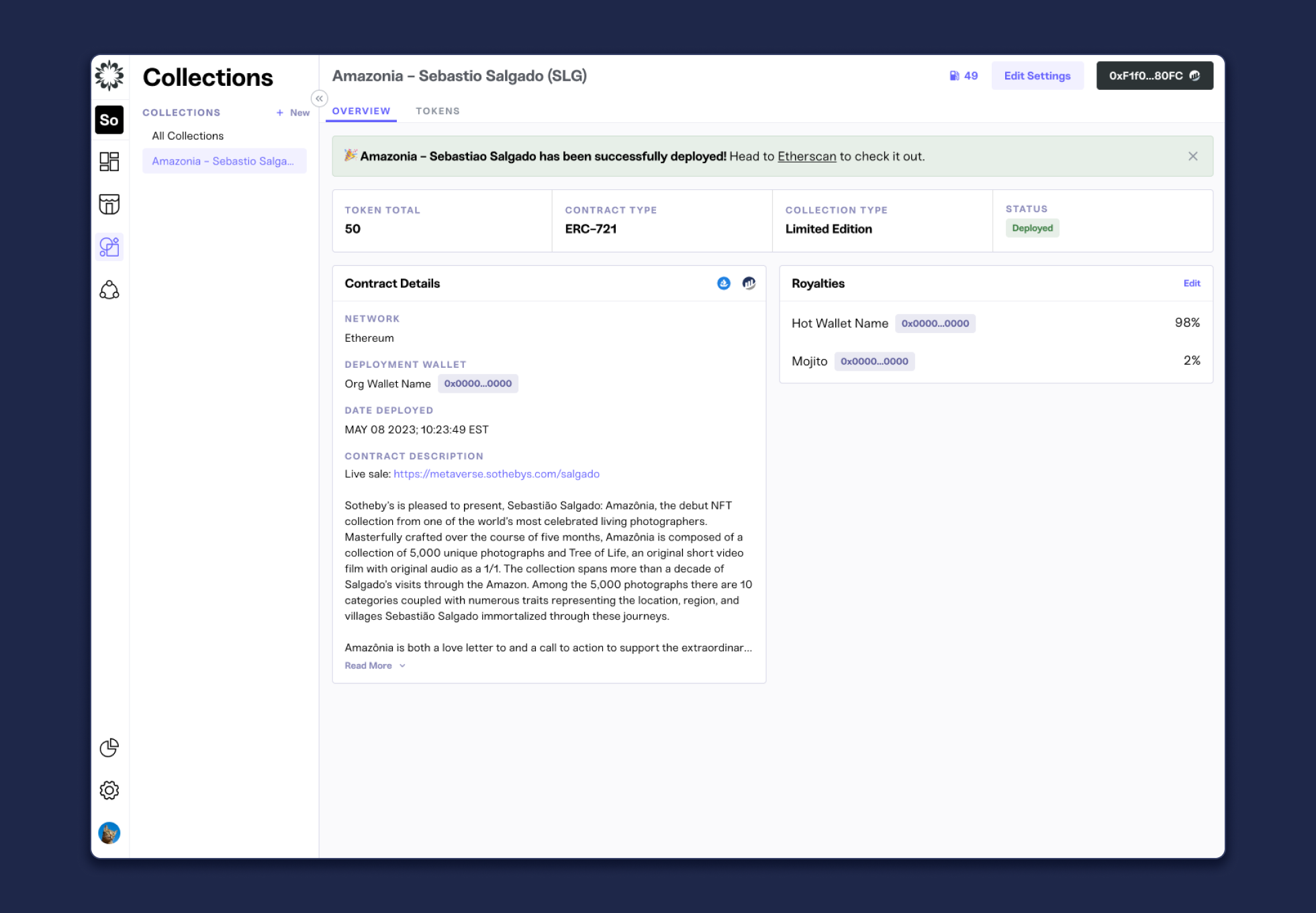
Now that contract creation has become more standard, Managers can easily craft their own collection and select not just standard
contract types like limited edition 1-of-1s or ERC1155s but also craft redeemable collections and claimable sale types that further
diversify the use case of NFTs.
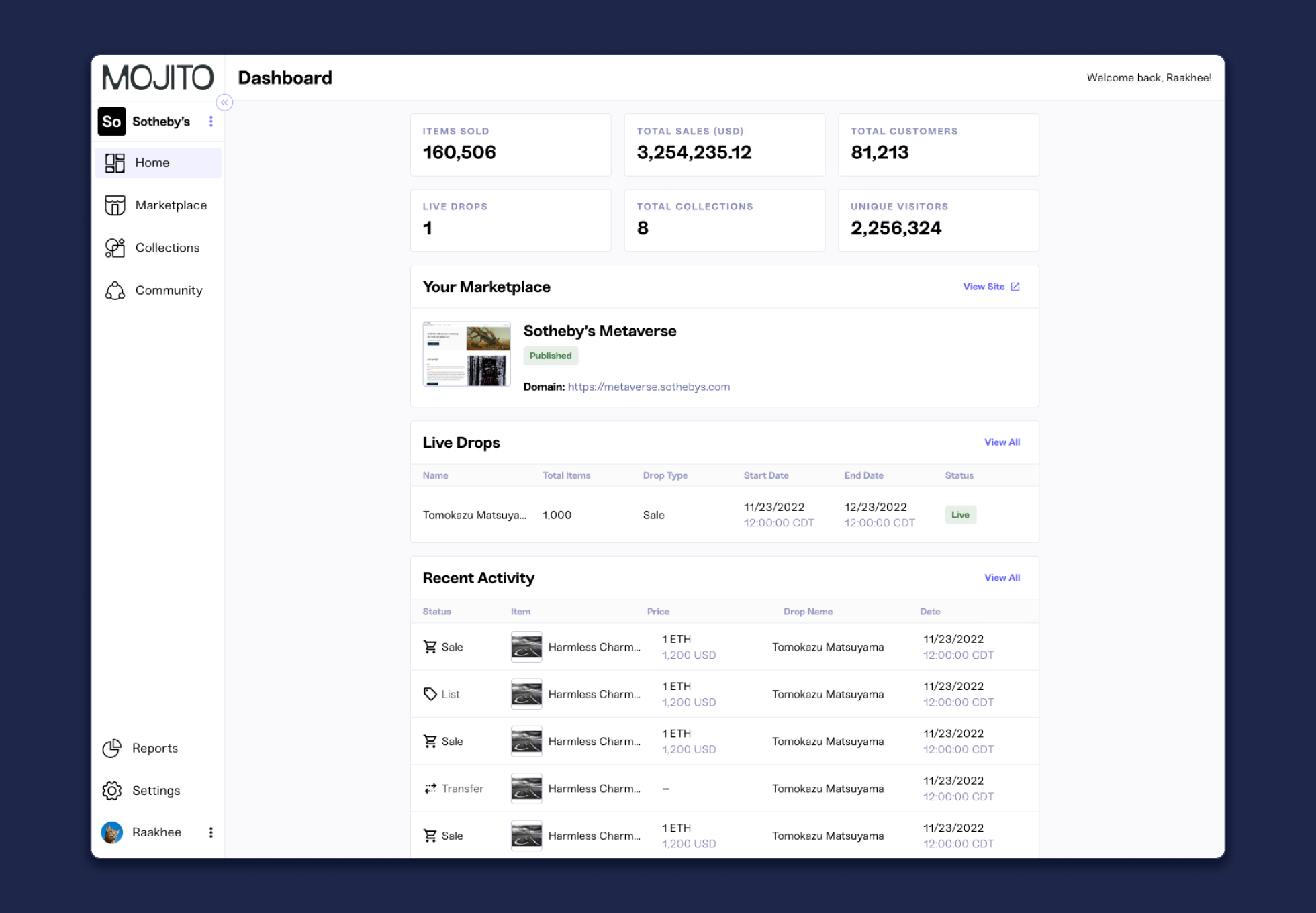
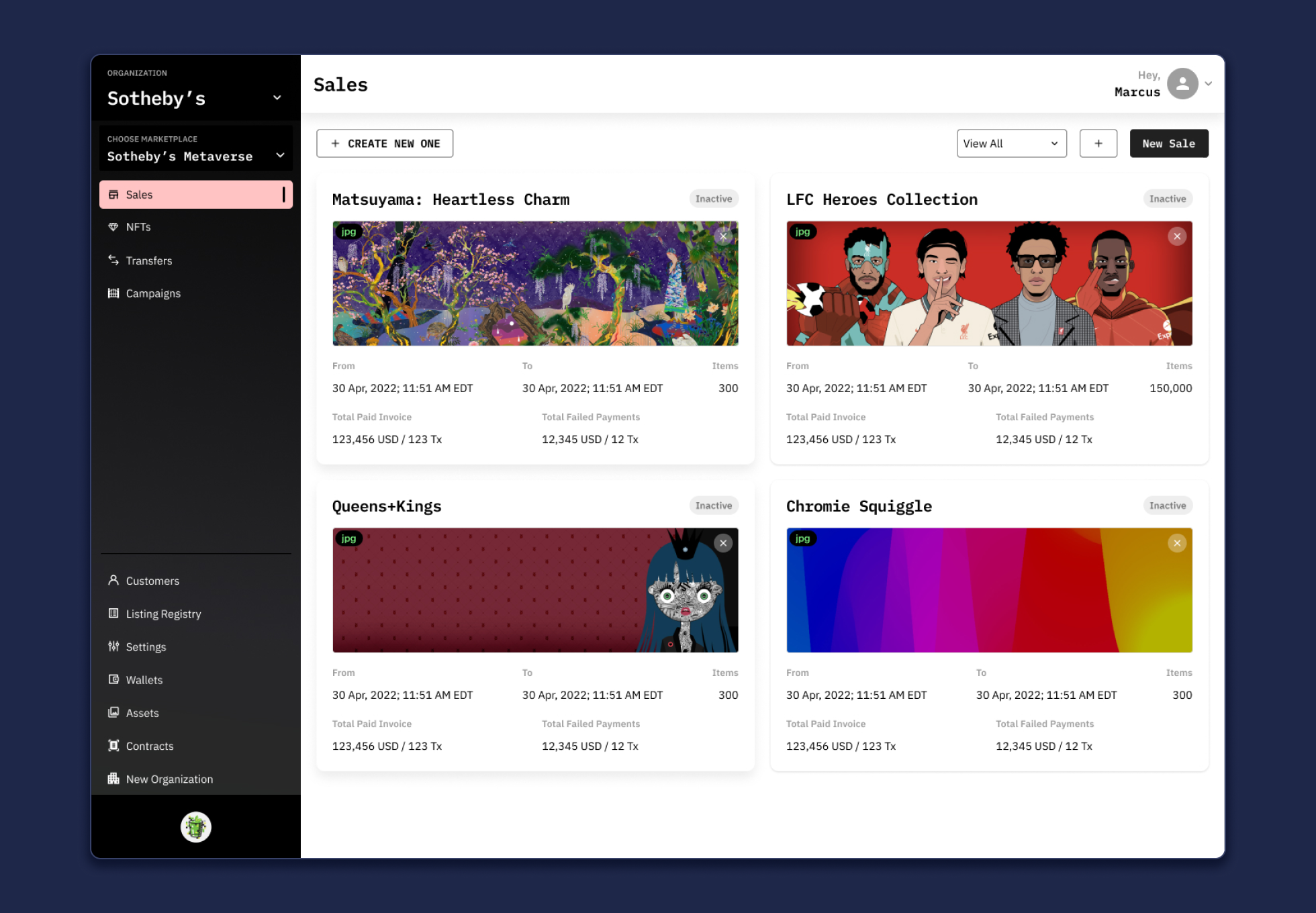
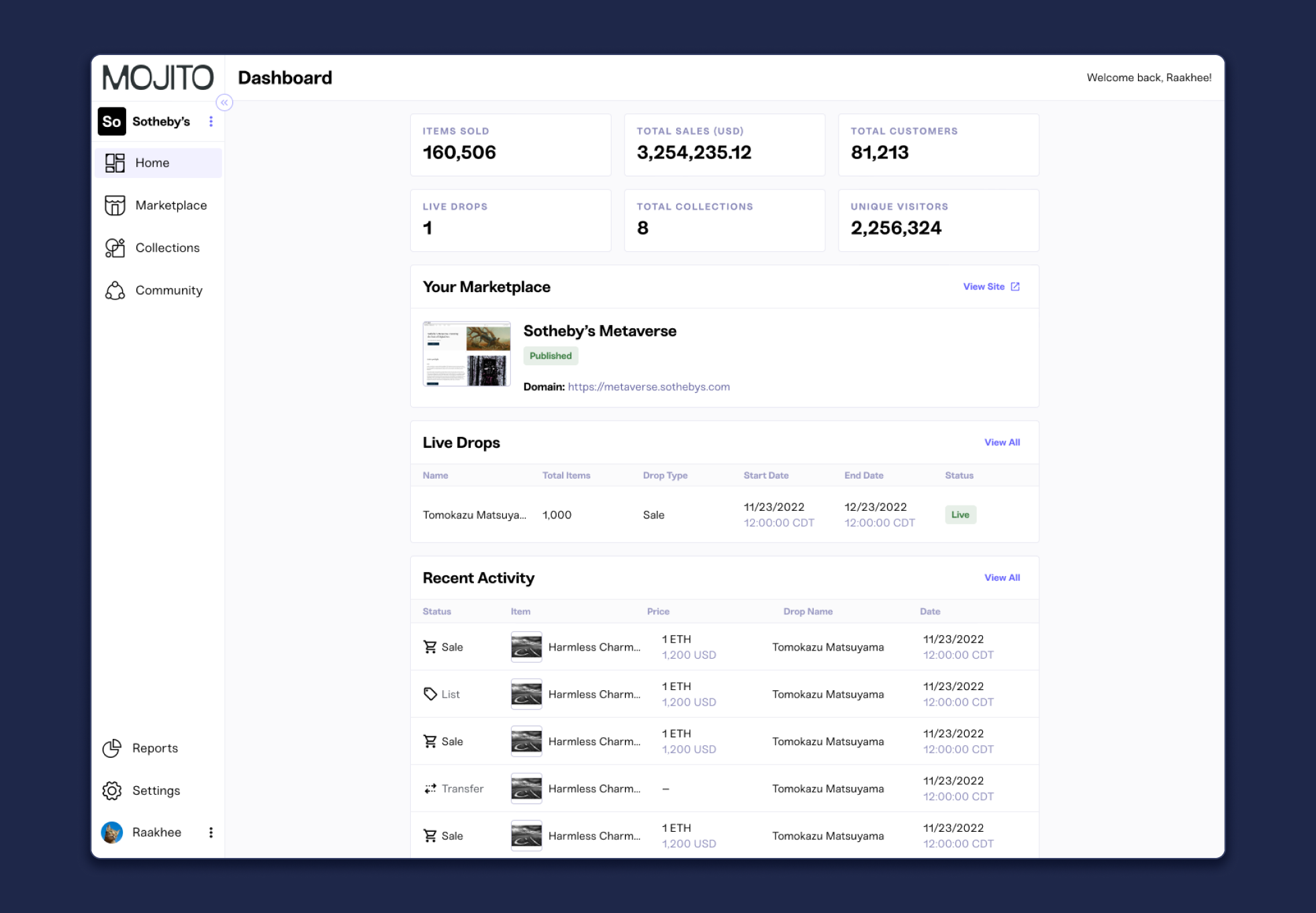
Manager flows are mainly patterned to Web2 — allowing them to focus on creating sales (Drops) and managing listings (Items) in their storefronts
(Marketplace) without having to worry about additional complexities such as smart contracts and wallet interactions
(i.e. wallet signing and gas costs).
Results
Going Beyond Digital Tokens
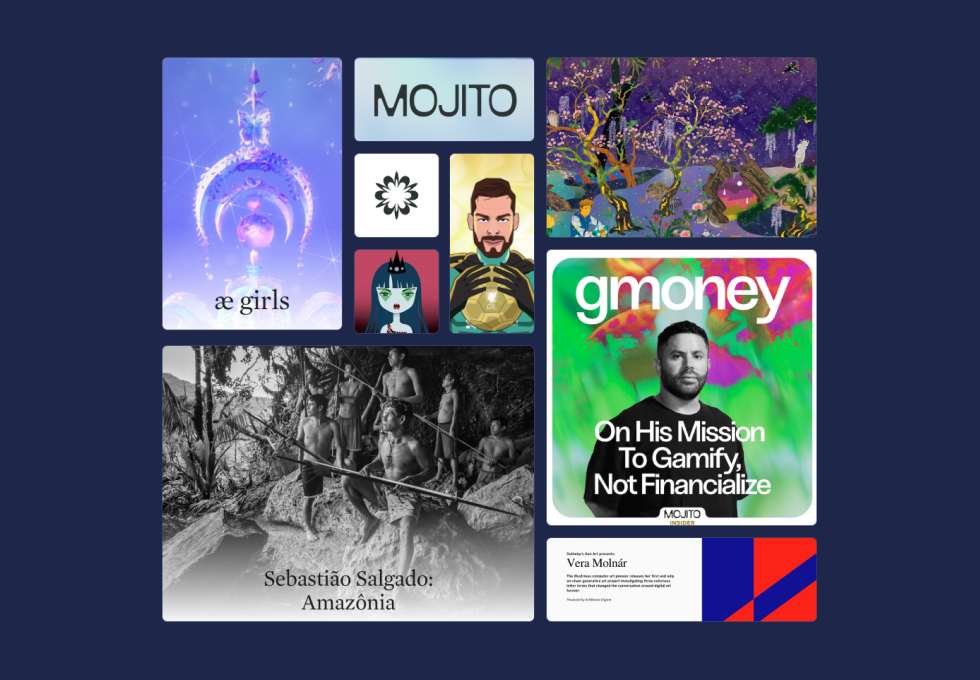
The Mint platform enabled our clients like Sotheby's to unlock growth in the Web3 space, earning more than $130M in sales through their successfully
launched in-platform Drops such as LFC, Tomokazu Matsuyama, and Sebastiao Salgado.
Other clients also found success in their launched marketplaces and primary sales that went beyond trading digital tokens. Activations involving more than
online NFT drops such as claimables integration during in-person events, redeemables as reward for being a supporter of their brand, and collectibles were
just some of the creative use cases enabled by the platform.
Version 2 of Mint became a more robust product that not only handles item management and delivery within the blockchain. Designing a bridge that
allows the transition from Web2 to Web3 to become smoother unlocked opportunities not just for end-users but for Web2 businesses to explore different
use-cases with NFTs that goes beyond trading (e.g. memberships, rewards, community management, and proof-of-ownership for real, physical goods)
Reflection
Keeping Up with Development
To close the loop, we've designed a secondary marketplace as well as a site builder for the platform which I led. The site builder was initially
a part of V1 of Mint but was decided that API endpoints were enough for our Developer type users and they can choose to partner with external agencies to
create more custom drop experiences from them.
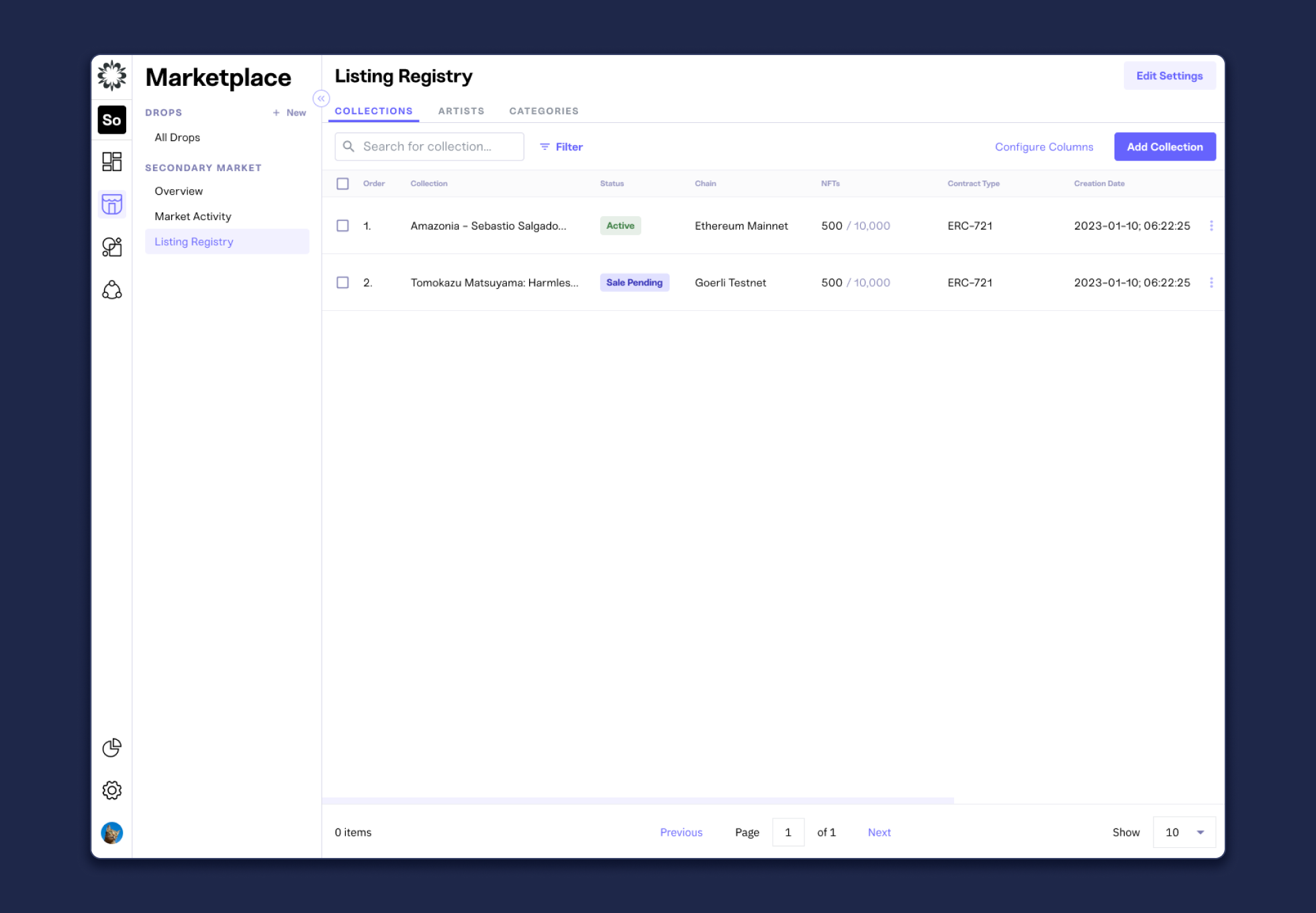
We designed the site builder and secondary marketplace to be a simple plug-and-play feature that our users can easily activate and launch without the
need for set-up, given that they've already launched a drop.
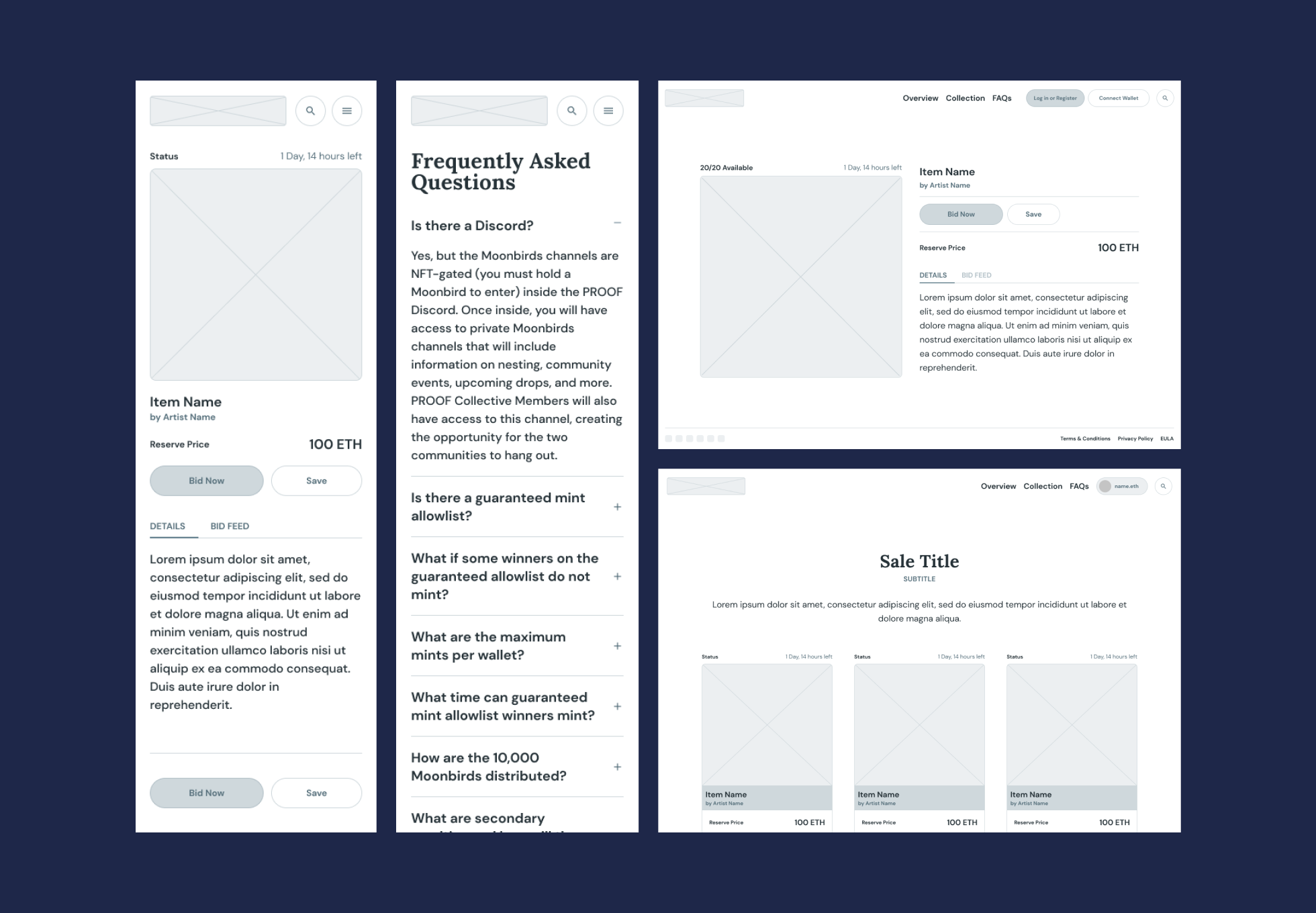
Designing a platform involving new technologies that continue to evolve at a rapid pace is oftentimes challenging but definitely rewarding
as it helps businesses and their users unlock growth in a new space. Just as much as we’ve relied on tried and tested Web2 patterns to
provide a familiar experience for users, balancing it with how it can be improved for Web3 was one of my key takeaways for this project.
Team
V1: Aimee Regur, Melvin Alvarez, Tiffany Young, Dan Kinsley, Peter Ng, Matthew Iles, Alec Pomnichowski, Ionnix Design, Juan Pablo Repostura, Vitali Zahharov,
Mojito Dev Team, Ionnix Dev Team
/ V2: Tiffany Young, Melvin Alvarez, Aimee Regur, Raakhee Miller, Marvin Mathew, Neil Mullins, Liviu Anghelina, Ionnix Design, Ionnix Dev Team